Claims AI · module one

Follow one patient from the counter to the payment

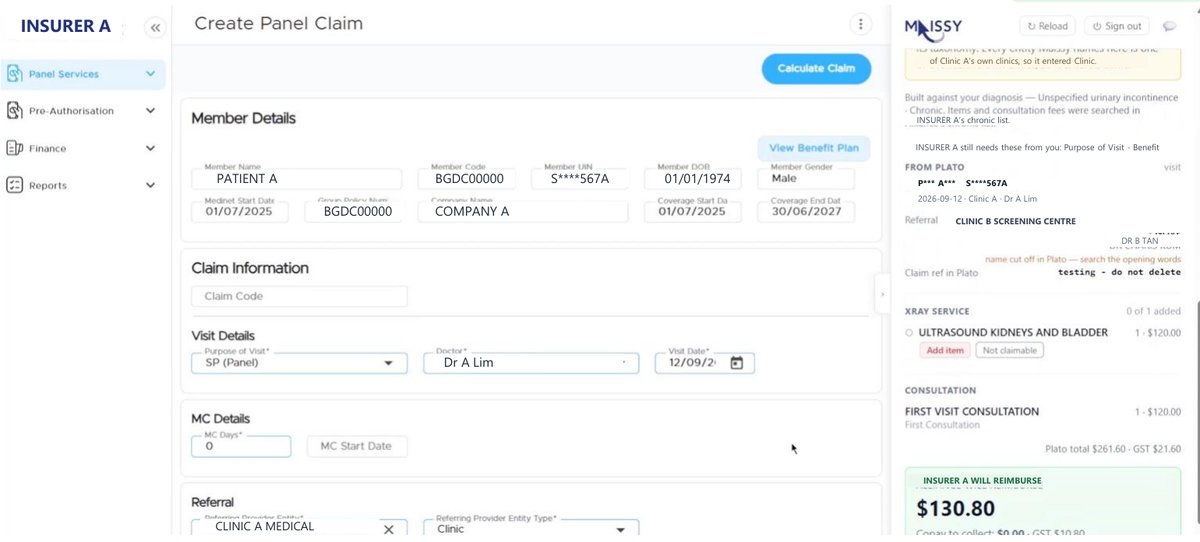
MAISSY is one panel that opens beside whatever your staff already have on screen, and one board for the work that has no home. Pick a moment in the visit to see what it does there.

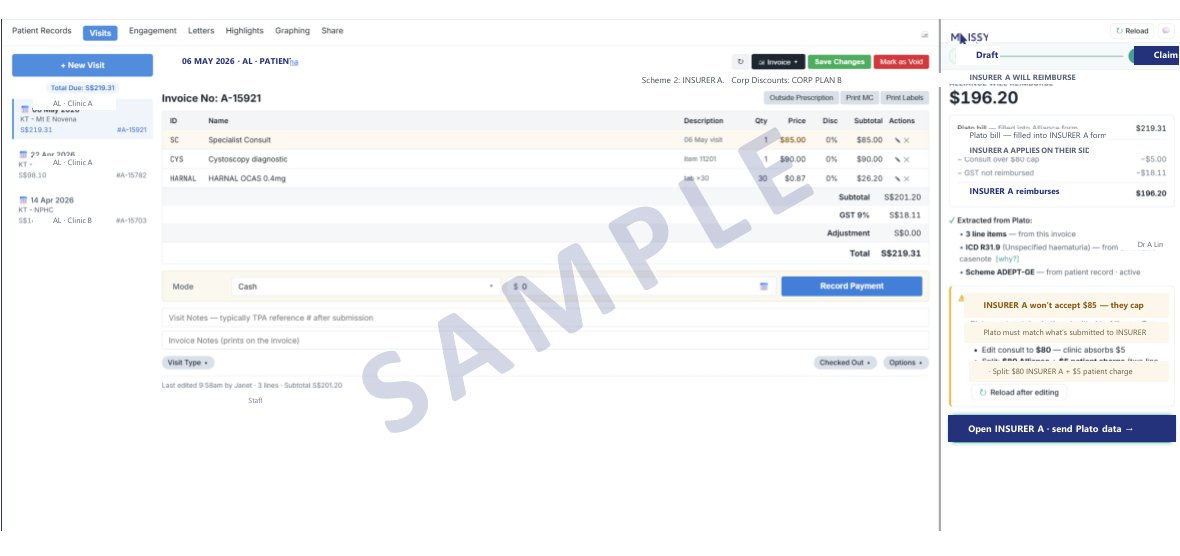
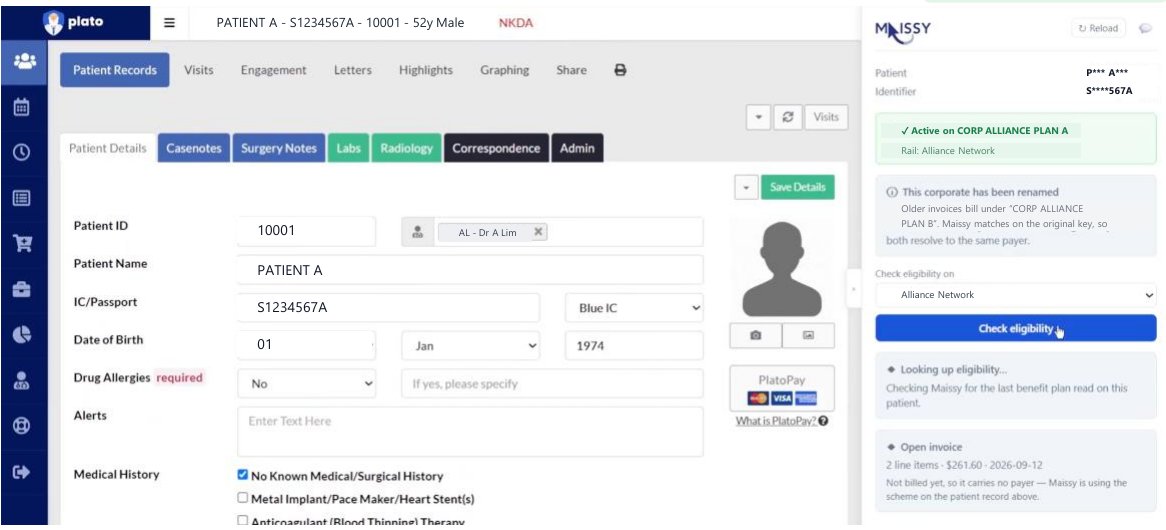
MAISSY panel open inside the clinic management system at registration, showing the active scheme and an eligibility check
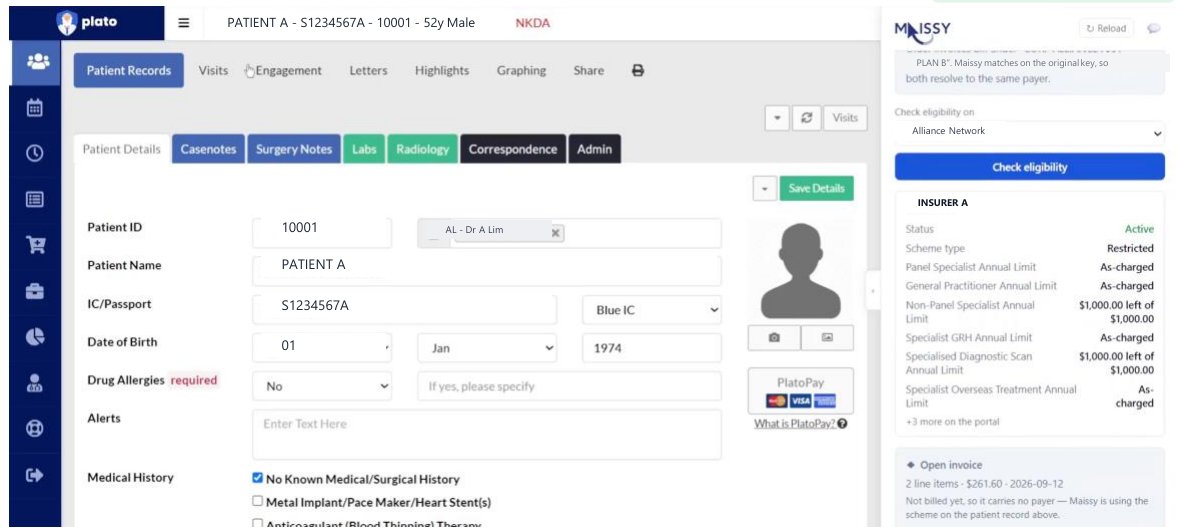
MAISSY panel showing insurer limits quoted at the counter
Live in the pilot build

The answer before the question

The panel opens inside your CMS the moment the patient is registered. Nobody has to ask it for anything, and your registration workflow does not change.

  • Active scheme and plan confirmed against the payer, without anyone opening a portal.
  • Limits shown up front: $1,000 of $1,000 non-panel specialist, $1,000 of $1,000 diagnostic scan, quoted at the counter rather than discovered at billing.
  • Unbilled work surfaces here: an open invoice from an earlier visit ($261.60, 12 Sep) is flagged at registration.
What changes: the counter conversation happens with the payer's answer in hand, not weeks later on a rejection notice.
Module one · Claims AI

Claims AI: the practice manager's week, with and without it

Claims AI is the first MAISSY module, and the one live today. Insurance, TPA and hospital claims run on four rails, and your staff are the integration layer between them. These are the numbers from the specialist group where Claims AI was piloted.

The job
Today
With Claims AI
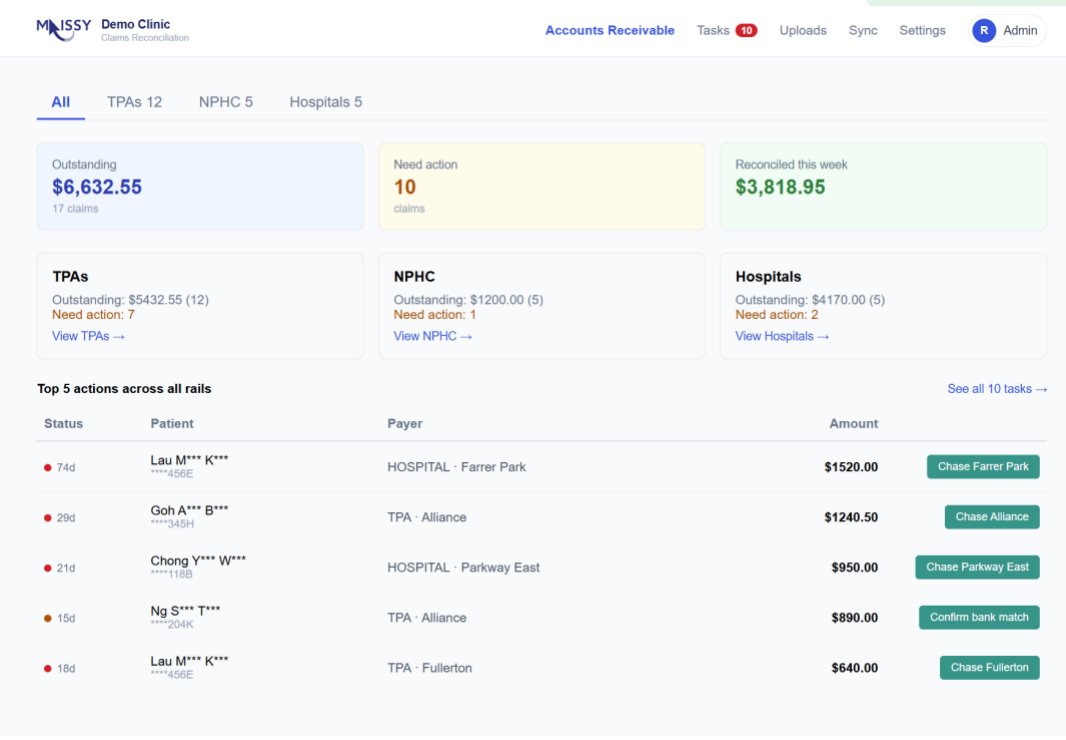
Reconcile a week's claimsacross TPAs, NPHC, hospitals and bank receipts
~3 hoursone person, line by line, from statements and a spreadsheet
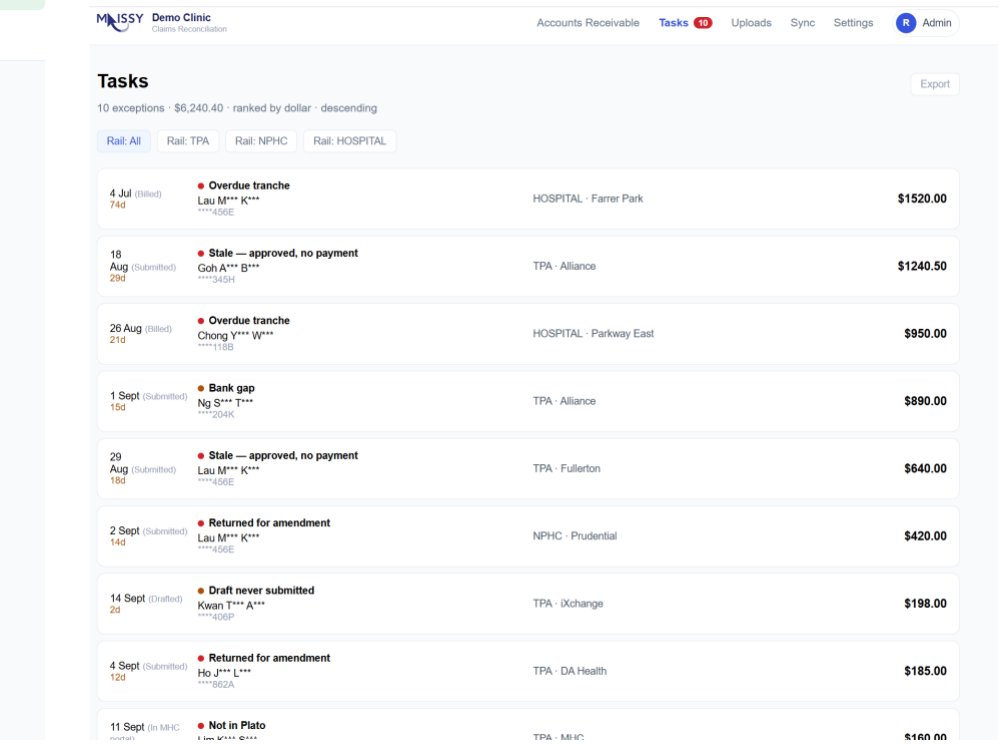
< 10 minexceptions ranked by dollar, each with a next actionSKYIQ pilot study 2026 · > 90% less reconciliation time
Prepare one claimfind the patient, re-key the form, attach documents
~5 mintyped twice: once in the CMS, once on the payer's portal
~2 minfields mapped and filled on confirmation; the nurse reviews and submitsSKYIQ pilot study 2026
Find out a claim was rejectedor short-paid, or returned for amendment
Weeks laterfound by a person reading a remittance line by line
Same daylands in the queue with the reason stated and the fix drafted
Know the co-pay at the counterand the cap remaining on the plan
At billingor on the rejection notice
At registrationeligibility and limits on screen before the patient sits down
2.4 / 10how Singapore doctors rate the administrators they bill throughSMA member survey · mean score 2.38
87%of private-practice physicians report a heavier administrative workload2025 Singapore primary-care study · 86.7%
1 persontypically carries reconciliation across every rail, so errors surface weeks laterSKYIQ workflow study · 1,072 claims reconciled

And the load is rising. The 2026 rider changes move more of each bill to the patient, which means more co-payments to quote, more caps to track, and more short payments to chase.

Who does what

MAISSY drafts. A person approves. Your CMS stays the record.

The division of labour is fixed in the architecture, not in a policy document. Singapore's 2026 healthcare AI guidance requires human oversight; MAISSY was designed that way from the first frame.

MAISSY

Does the typing and the watching

  • Checks eligibility and quotes limits at the counter.
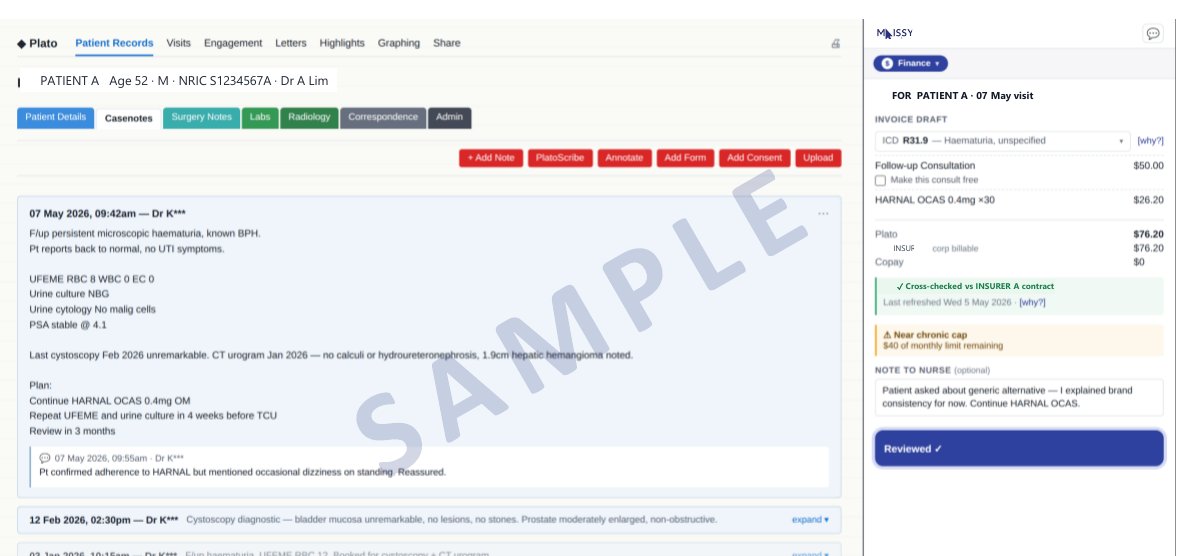
  • Drafts the invoice from the approved note and prices it against the live contract.
  • Navigates the payer portal and fills the form, field by field, with an audit of each transformation.
  • Watches every submission and ranks what is stuck by dollar, with the fix prepared.
  • Stops cleanly at every login and 2FA wall.
Your team

Approves everything that leaves the building

  • The doctor approves every clinical statement before it is used.
  • The nurse reviews the draft and presses submit on the payer's form.
  • The practice manager works the queue and clears authentication walls.
  • How much MAISSY does on its own is set per step and per clinic, and raised only on measured evidence.
Your systems

Keep their roles

  • Your certified CMS stays the system of record. MAISSY sits above it, never in place of it.
  • No connection to the national record. Ever. Clinical facts come from your own system, under your authority.
  • Payer portals are used as you already use them, with credentials kept secure.
  • Bank and payment feeds are read for matching, not moved.

Want to see it on your own claim types?

Bring your practice manager; she will have the best questions.

Book a demo